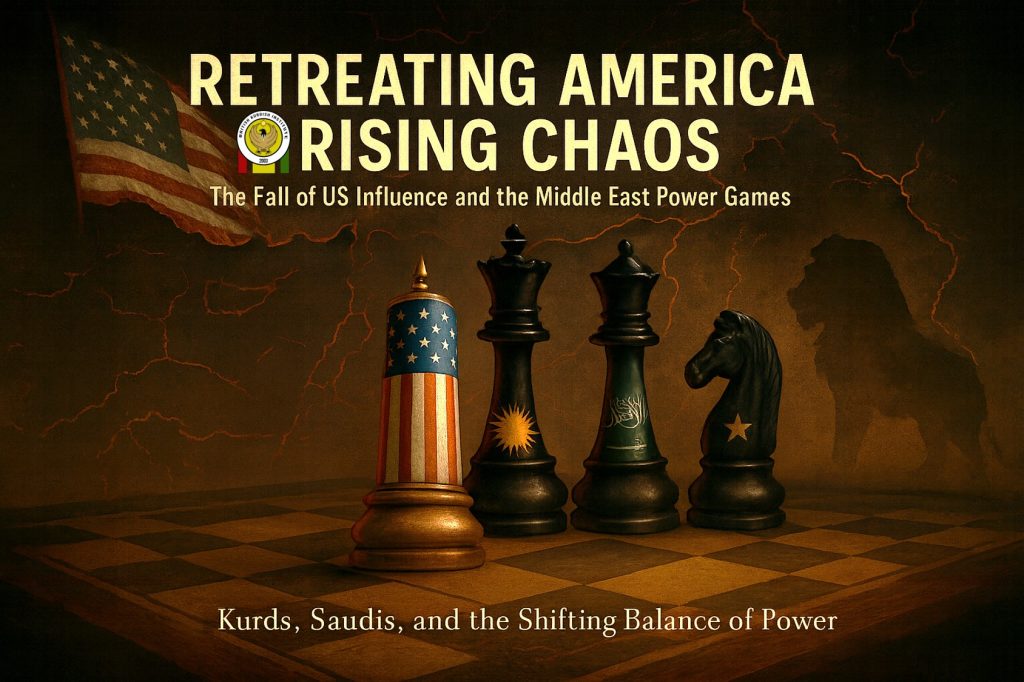

The geopolitical landscape of the Middle East is undergoing a dramatic transformation. As U.S. influence retreats, regional powers are recalibrating their strategies. Saudi Arabia, once considered a key American ally, finds itself weakened, especially after its ambiguous maneuvers with the Kurds. The referendum called by Massoud Barzani, then president of the Iraqi Kurdistan Region, served as a turning point, exposing fault lines and reshaping alliances across the region.
The Kurdish Factor in Regional Power Struggles
With an estimated 30 million Kurds spread across Turkey, Iran, Iraq, and Syria, their aspirations for independence have long threatened regional stability. Ankara, Tehran, and Baghdad shared a common interest in preventing the emergence of an independent Kurdistan. For Turkey, this meant sacrificing its Kurdish allies, even those it had relied upon in the fight against the PKK and the PYD in Syria.
Israel, however, openly supported Kurdish statehood. Prime Minister Benjamin Netanyahu declared that Israel backed the Kurds’ “legitimate efforts” for independence, while Israeli officials argued that a stable Kurdish entity could help counterbalance Iran and regional instability.

Saudi Arabia’s Covert Encouragement
Publicly, King Salman reaffirmed support for Iraq’s unity. Behind the scenes, however, Saudi envoys encouraged Barzani’s referendum. Retired general Anwar Eshki argued that creating a Greater Kurdistan would cut down the influence of Iran, Iraq, and Turkey, effectively redrawing borders to weaken them.
Other Saudi figures echoed this sentiment. Dr. Abdullah al-Rabiah emphasized Kurdistan’s strong economic and political potential, while the UAE also quietly offered backing. Reports suggest that Barzani’s son, Masrour, held secret meetings in Abu Dhabi shortly before the referendum.
Regional Signals and Strategic Shifts
Saudi Arabia’s shifting policies became evident when its minister for Gulf affairs, Thamer al-Sabhan, visited Raqqa alongside U.S. envoys and Syrian Democratic Forces commanders. This was widely seen as a direct signal to Turkey. Yet, once Kurdish forces in Kirkuk faltered, Riyadh quickly reversed course, expressing full support for Iraq’s territorial integrity.
The episode highlighted the fragility of alliances. U.S.-trained Iraqi forces coordinated with Iranian-backed militias to oust Kurdish Peshmerga units—once essential partners in the fight against ISIS. Over 100,000 Kurds fled Kirkuk amid violence, torching of businesses, and ethnic cleansing. Washington, meanwhile, stood by with minimal diplomatic response.
America’s Retreat and the Post-Western Middle East
The fall of Kirkuk marked a new reality: being a U.S. ally no longer guarantees military protection. As America pulls back—continuing the trajectory set by both Obama and Trump—it leaves behind a dangerous vacuum. Instead of a new balance of power, the region is now contested by rival militias and shifting loyalties, more reminiscent of 18th-century European principalities than modern state alliances.
Iran’s Expanding Influence
Among the biggest winners of these developments is Iran. Qassim Suleimani, commander of the Quds Force, brokered deals that secured Iranian-backed control over strategic oil fields and territories. Turkey, increasingly isolated, has been drawn closer to Tehran, while Saudi Arabia faces regional setbacks.
The legacy of Saudi Arabia’s missteps is grim: devastated Sunni-majority cities, refugee crises, and diminished regional credibility. In the broader picture, Iran has consolidated its influence, the U.S. has retreated, and the Kurds have once again paid the price for great power games.