
Venezuela’s Crisis and U.S. Involvement: A Complex Web
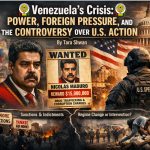
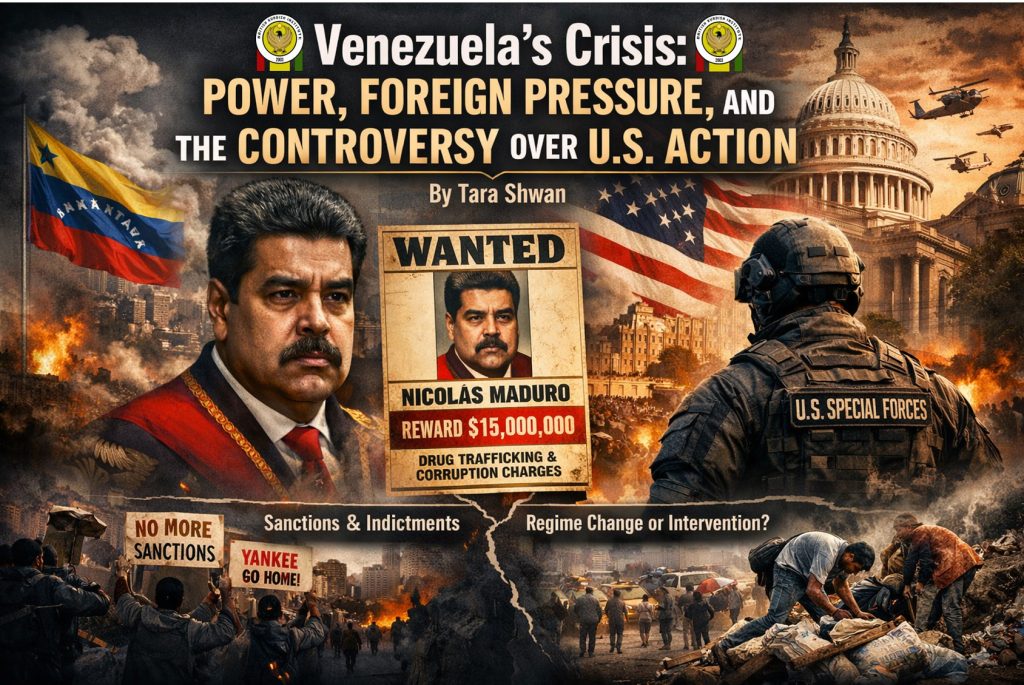
Venezuela’s long-standing crisis has been intensified by the role of the United States. For years, Washington has faced accusations of attempting to remove or even arrest Venezuelan President Nicolás Maduro. These claims did not emerge overnight; they evolved alongside sanctions, criminal charges, and aggressive rhetoric that blurred the line between diplomatic pressure and direct intervention.
U.S. Sanctions and Criminal Charges Against Maduro
Starting in the late 2010s, the U.S. accused senior Venezuelan officials, including Maduro, of corruption and drug trafficking. In 2020, the U.S. Department of Justice announced criminal charges against Maduro and other high-ranking figures, offering substantial rewards for information leading to their arrest.
While largely symbolic—since U.S. authorities cannot arrest a sitting foreign president in his own country—these charges escalated U.S. policy and painted Venezuela’s leadership as a criminal network rather than a legitimate government.
Legal Justifications and Security Concerns
The Trump administration justified these actions by citing threats to U.S. national security and regional stability. Maduro and his inner circle were accused of narcotics trafficking, corruption, and collusion with armed groups labeled as terrorist organizations. U.S. officials framed Maduro not as a protected head of state, but as a criminal leader who had forfeited legitimacy.
This rationale was reinforced by the U.S.’s refusal to recognize Maduro as Venezuela’s lawful president, combined with sweeping sanctions and maximum-pressure strategies designed to accelerate regime change. However, no legal mechanism existed to physically arrest him inside Venezuela.
Venezuelan Perspective and Internal Crackdowns
From Venezuela’s perspective, U.S. actions amounted to foreign interference. Maduro’s government leveraged this narrative to justify crackdowns, claiming constant threats of invasion, coups, and kidnapping attempts. Rumors and reports about coups, mercenary incursions, and intelligence operations circulated widely. Although some incidents involved private actors, the Venezuelan government consistently blamed Washington, fueling public fear and political tension.
International Law and Head-of-State Immunity
Under international law, the U.S. cannot unilaterally seize or arrest a sitting president of another sovereign nation. Heads of state enjoy immunity, and any attempt without consent or international approval would likely be considered illegal and an act of aggression. Consequently, analysts argue that U.S. criminal charges against Maduro were designed more as political leverage than practical arrest plans.
Domestic and International Consequences
The perception that the U.S. might target Venezuela’s president had significant effects. Domestically, it reinforced Maduro’s siege narrative, allowing for stricter security measures. Internationally, it created divisions: some nations supported U.S. pressure to push for democratic reforms, while others criticized these tactics as undermining international law.
For ordinary Venezuelans, the crisis brought economic hardship, political uncertainty, and increased social polarization. Sanctions, foreign isolation, and constant instability worsened daily life, regardless of the U.S.’s actual intentions.
Conclusion: A Struggle Shaped by Power and Foreign Pressure
The controversy over U.S. involvement underscores a key aspect of Venezuela’s crisis: it is not only a domestic power struggle but also a confrontation shaped by foreign pressure, legal disputes, and sovereignty debates. The ramifications continue to affect Venezuela’s governance, its citizens, and its international relations.