
Introduction:
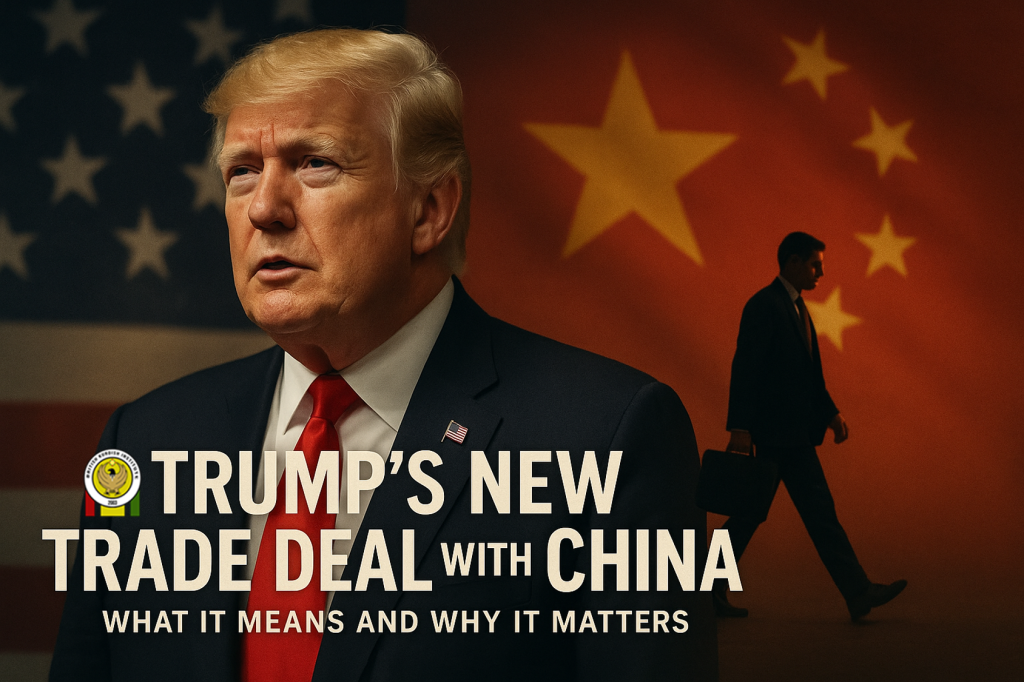
President Donald Trump’s newly announced trade agreement with China is a significant step in reshaping U.S.-China economic relations. This trade deal spans critical sectors, including rare earth elements, tariffs, agriculture, and fentanyl precursor chemicals. Despite its potential for short-term gains, the agreement is structurally fragile, with challenges looming over its long-term implementation.
Key Elements of the US-China Trade Agreement
1. Access to Critical Minerals and Rare Earths
China has agreed to ease its export controls on essential minerals like gallium, germanium, and graphite. This will provide the U.S. with access to crucial resources used in electronics, electric vehicles, and defense technologies. This move reduces U.S. vulnerability in key industrial sectors.
2. Tariff Adjustments
Despite maintaining a “55 percent” tariff burden on Chinese goods, which includes multiple duties, both nations have agreed to extend a 90-day freeze on escalating tariffs. This creates temporary market stability and reduces the immediate threat of further tariff increases. Additionally, China will suspend many of its retaliatory tariffs on U.S. products.
3. Agricultural Purchases
Agriculture is a central part of the deal. China has committed to buying at least 12 million metric tons of U.S. soybeans by 2025, with additional U.S. products like sorghum, pork, and wood logs also included. This renewed market access provides relief to American farmers and promises long-term growth for U.S. agriculture.
4. Fentanyl Precursor Crackdown
China has agreed to stop exporting chemicals used in fentanyl production, addressing a significant public health crisis in the U.S. This provision also has national security implications, aiming to reduce the flow of illegal drugs.
5. Semiconductor Industry Support
China will reverse its retaliatory measures against U.S. semiconductor companies, which will help stabilize the tech supply chain, crucial in the wake of the pandemic. This provision targets legacy chip manufacturing facilities, enhancing the U.S.’s position in the global tech market.
6. One-Year Rare Earth Deal and Ongoing Negotiations
The rare earth export deal lasts one year, with provisions for annual renegotiations. Both governments have agreed to maintain an ongoing mechanism for discussions on trade, economic, and national-security issues, signaling an intention to keep diplomatic channels open.
Why This Trade Deal Matters
Strategic Industrial Relief
The easing of rare earth export controls is crucial for U.S. manufacturers and defense industries, reducing their dependence on Chinese supply and mitigating risks related to global supply disruptions.
Economic Stability
The tariff freeze provides immediate relief to U.S. importers and consumers, while China’s rollback of retaliatory tariffs offers economic respite, particularly benefiting U.S. farmers.
Support for U.S. Agriculture
With renewed commitments to purchasing U.S. agricultural products like soybeans, this deal helps restore lost market share and ensures better economic prospects for American farmers.
Public Health and Security Gains
By halting the export of fentanyl precursors, China addresses a critical public health issue in the U.S., offering significant national security benefits.
Tech Supply Chain Stabilization
The semiconductor provisions aim to stabilize a volatile market and provide long-term benefits to the tech sector, a key part of both the U.S. and global economies.
Challenges and Risks
Despite its broad scope, the deal faces several risks:
-
Enforcement Issues: Previous U.S.-China agreements have struggled with consistent follow-through, leaving doubts about the deal’s durability.
-
Short-Term Structure: The one-year rare earth deal could lead to instability if renegotiations are contentious.
-
Complex Tariff Framework: The “55 percent” tariff claim is more about political messaging than economic clarity, potentially complicating future negotiations.
-
Domestic Criticism: Both sides may face internal opposition from groups who perceive the concessions as too generous.
Conclusion
Trump’s new trade agreement with China represents a significant shift in U.S.-China relations, offering both immediate benefits and long-term challenges. While the deal provides strategic industrial relief, economic stability, and agricultural support, its short-term framework and the need for ongoing compliance leave uncertainties about its future effectiveness. Whether it becomes the foundation for long-term stability or just a temporary truce will depend on its implementation and the actions of both governments in the months to come.