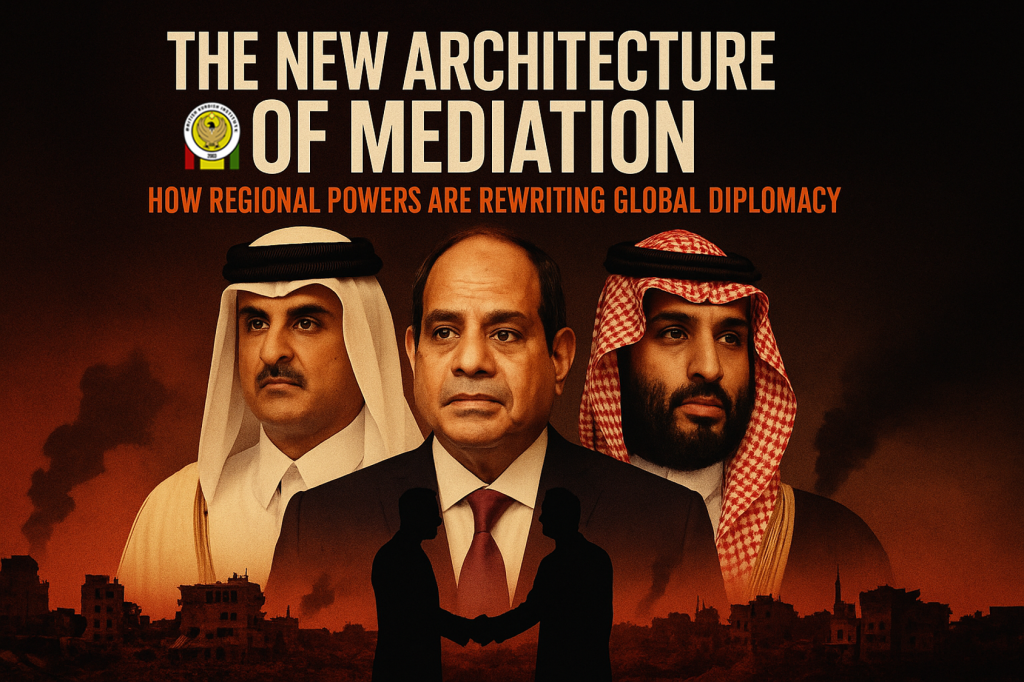

Introduction: A Global Shift in Conflict Mediation
The global system of mediation is entering a transformative phase. For decades, superpowers like the United States and institutions such as the United Nations dominated peace negotiations. Today, that model is giving way to a new diplomatic order led by regional actors—particularly Qatar, Egypt, and Saudi Arabia.
The Gaza conflict offers one of the clearest examples of this shift. What may appear to be a temporary response to geopolitical gridlock actually reflects a long-term restructuring of legitimacy, diplomatic access, and influence in global politics.
The Emerging Mediation Order: Key Tensions and New Dynamics
This new landscape introduces several defining tensions. These are not contradictions, but rather the forces shaping modern diplomacy:
-
Neutrality vs. national interest
-
Legitimacy vs. vulnerability
-
Stabilization vs. fragmentation
Understanding these tensions is essential to analyzing how regional powers operate on the diplomatic stage.
1. Power and Capacity: The Hybrid Strength of Regional Mediators
Regional mediators increasingly rely on soft power, not military force. Their influence comes from neutrality, access to non-state actors, and reputational credibility.
Qatar: Financial Leverage and Diplomatic Agility
Qatar represents the model of a wealthy, highly connected mediator. Its strengths include:
-
Vast financial resources
-
Political access to actors like Hamas and the Taliban
-
A specialized, efficient diplomatic corps
Qatar’s perceived neutrality—codified in its own constitution—strengthens its ability to broker agreements.
Egypt: Historical Legitimacy and Strategic Geography
Egypt’s mediation capacity comes from a different type of wealth:
-
Deep political history
-
Longstanding intelligence networks
-
Control of the Rafah crossing
-
Decades of involvement in Arab-Israeli negotiations
Egypt operates not merely as a broker, but as a strategic stabilizer in the region. Its institutional memory and geopolitical authority allow it to exert influence in ways Qatar cannot.
Structural Limitations
Despite their strengths, smaller states face constraints:
-
Limited bureaucratic capacity
-
Risk of overstretch
-
Dependence on balancing great-power expectations
2. Legitimacy and Trust: The Double-Edged Sword of Access
Regional mediators often enjoy more trust than global powers. This trust, however, is fragile.
Qatar’s Access-Based Credibility
Because Qatar maintains open channels to groups Western governments cannot engage, its legitimacy stems from unique access rather than coercive authority.
Egypt’s Stabilizing Record
Egypt’s historical role in Gaza and its proximity give it established credibility rooted in long-term engagement.
High Trust, High Vulnerability
Trust can be lost quickly. Accusations of bias, sudden negotiation shifts, or rivalry between mediators can erode credibility almost overnight.
3. Institutional Strategy: Formal Mechanisms Meet Informal Networks
Regional mediation blends both structured and flexible diplomatic tools.
Formal Structures
-
Specialized mediation teams (e.g., in Qatar)
-
Technical experts
-
Expanding mediation bureaucracies
Informal Tools
-
Personal networks
-
Intelligence backchannels
-
Quiet, confidential communication channels
Economic Leverage
Funds for reconstruction, humanitarian relief, and post-conflict investment often operate as negotiating incentives.
4. Geopolitical Rebalancing: Declining Faith in Traditional Powers
As confidence wanes in the United States and the United Nations, regional actors are stepping in.
Growing Gulf Coalitions
Members of the Gulf Cooperation Council—including Qatar, Egypt, Saudi Arabia, the UAE, and Oman—are becoming more active in conflict management.
But this expansion brings challenges:
-
Overlapping mediation tracks
-
Competition among regional rivals
-
Fragmented diplomatic frameworks
This shift creates a more localized but potentially more fragmented global mediation environment.
5. Risks and Constraints Facing Regional Mediators
Regional mediators face structural challenges:
-
Limited institutional capacity
-
Vulnerability to political pressure (e.g., Qatar’s 2017 blockade)
-
Accusations of partiality
-
Competitive mediation that weakens coherence
These constraints can undermine their ability to deliver lasting solutions.
Case Study: The Gaza Conflict
1. Qatar’s Central Mediation Role
Qatar has been at the forefront of ceasefire negotiations and hostage release efforts. Key elements of its role include:
-
Financial incentives
-
Reconstruction commitments
-
Diplomatic access to Hamas leadership
However, its credibility is periodically challenged when negotiations stall.
2. Egypt’s Strategic Leverage
Egypt’s mediation is rooted in:
-
Geographic proximity
-
Control of Gaza’s key border crossing
-
Longstanding intelligence channels
Egypt often goes beyond temporary ceasefires, engaging in discussions on transitional governance. While coordination with Qatar is frequent, it is not always seamless.
3. Saudi Arabia and Rising Gulf Diplomacy
Saudi Arabia is expanding its diplomatic profile as part of its global strategy. Other Gulf states, including the UAE and Oman, are also deepening their involvement in regional conflict resolution.
4. Institutional Evolution of Mediation
Both Qatar and Egypt are shifting toward more structured peace frameworks, emphasizing:
-
Long-term planning
-
Reconstruction strategies
-
Governance arrangements
-
More formal diplomatic infrastructure
Broader Implications for Global Diplomacy
The rise of regional mediators is reshaping foundational norms:
-
Who has legitimacy to mediate
-
What compromises are possible
-
How reconstruction is coordinated
-
How post-conflict governance is designed
Regional mediators gain influence—but also face heightened exposure to political risk and international scrutiny.
Counterarguments: The Limits of Regional Mediation
Critics highlight several concerns:
-
Regional actors lack the coercive force of superpowers
-
True neutrality is difficult to maintain
-
Institutional capacity remains limited
-
Post-conflict governance efforts may be perceived as interference
These challenges could limit their ability to shape durable political settlements.
Conclusion: The Strategic Future of Regional Mediation
The rise of Qatar, Egypt, Saudi Arabia, and other regional states signals a major shift in the global architecture of peacebuilding. Their mediation style blends neutrality with strategic interest, credibility with vulnerability, and regional stabilization with geopolitical competition.
The key question ahead is clear:
Can regional mediators move beyond short-term truces and build sustainable political orders?
Their success will determine not only the future of conflicts like Gaza but also the long-term evolution of global diplomacy itself.