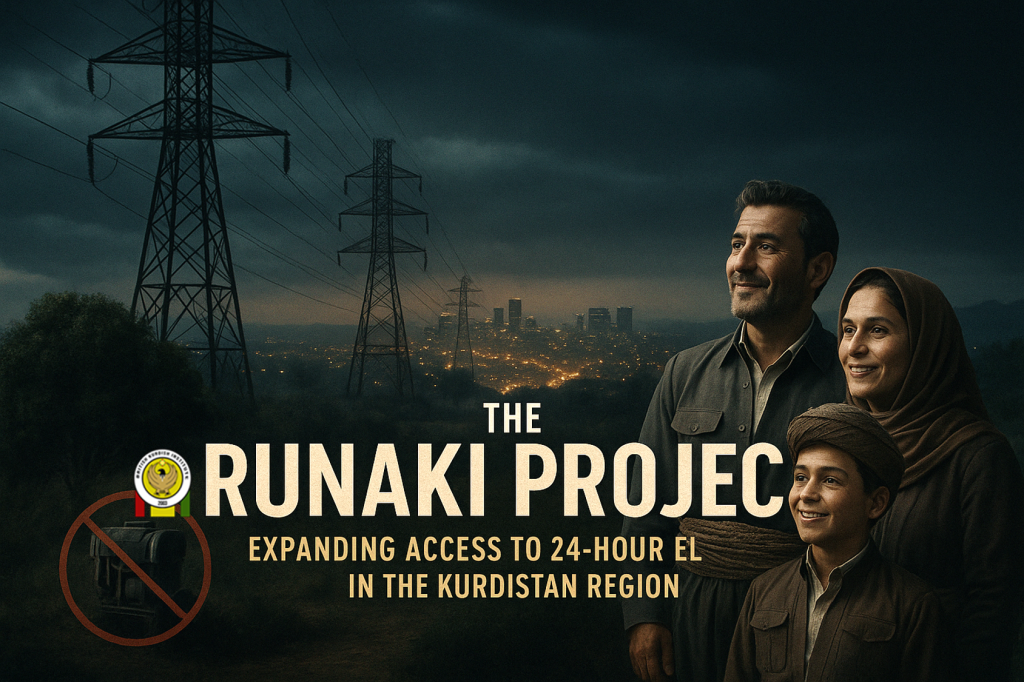

One year after the launch of the Runaki Project—meaning “light” in Kurdish—this landmark initiative is transforming electricity access across the Kurdistan Region. Today, around 70% of the population receives uninterrupted, 24-hour electricity thanks to this ambitious modernization effort.
The project represents a major step toward a cleaner, more efficient, and more reliable energy system. By reducing dependence on private diesel generators and optimizing energy demand, it is lowering pollution levels and reshaping the Region’s environmental landscape.
Expanding Access to 24-Hour Electricity
According to updated figures released on November 3, the Runaki Project currently delivers continuous electricity to 4,427,500 citizens across:
-
Erbil
-
Duhok
-
Halabja
-
Sulaimani
-
Independent administrations: Raparin, Soran, Zakho
So far, the project has connected 985,000 residential and 122,000 commercial subscribers to its network. Full integration of all five partnership categories—public and private—into a unified 24-hour system is planned for completion by the end of next year.
Ending Reliance on Private Generators
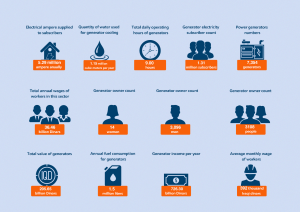
A 2021 survey by the Kurdistan Region Statistics Office (KRSO) recorded 7,354 private diesel generators operating across the Region, supplying around nine hours of electricity daily to more than 1.3 million subscribers.
The Runaki Project aims to eliminate:
-
Unreliable government electricity schedules
-
Private generator dependency
-
Seasonal fluctuations in power supply
Its benefits extend to residential, commercial, agricultural, and industrial sectors—ensuring stable, sustainable power for all consumer categories.
Environmental Impact: Phasing Out 7,000 Diesel Generators
A 2022 joint KRSO–CSO survey showed the distribution of private generators:
-
Erbil: 3,776
-
Duhok: 1,819
-
Sulaimani (incl. Halabja): 1,759
Today, 3,789 generators have already been shut down, leaving 3,565 still in operation. The Runaki Project plans to phase out all remaining units by 2026, eliminating:
-
754.8 million liters of annual diesel consumption
-
1,154,391 m³ of water used for engine cooling
-
Millions of tons of harmful emissions
This shift is already producing measurable environmental improvements.
Economic and Social Impacts of Generator Phase-Out
While environmentally beneficial, the shutdown of diesel generators carries socioeconomic consequences:
-
7,746 generator workers will lose jobs
-
3,108 generator owners, including 14 women, will lose their primary income
-
The sector currently generates 726 billion IQD yearly (≈ $555 million)
By 2026, this economic activity will drop to zero as generator operations end entirely.
Electricity Costs and Subscriber Growth Under Runaki
The Kurdistan Region has 1.9 million electricity subscribers, and 1,107,000 are now connected to Runaki’s modernized grid.
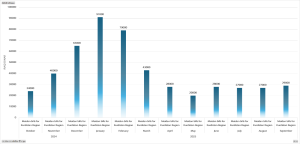
Monthly subscriber payments vary by consumption and season. Median monthly costs reached:
-
91,000 IQD ($70) in January
-
20,000 IQD ($15.28) in May
Using the median avoids distortion from extreme highs or lows and reflects typical household spending more accurately.
How Runaki Reduces Electricity Demand
The Runaki Project’s environmental benefits stem from two core strategies:
1. Reducing Electricity Consumption
KRG Electricity Minister Kamal Mohammad reported a 40% reduction in peak loads in areas connected to Runaki.
For example, a neighborhood that once required 10 MW now needs only 6 MW to meet the same demand.
This efficiency enables 24-hour power without increasing total production, which remains at approximately 4,200 MW.
2. Shifting to Cleaner Energy Sources
Residents are gradually transitioning from:
-
Diesel
-
Heavy fuel oil (black oil)
to natural gas, dramatically lowering emissions and improving air quality.
With lower demand, the Region can now:
-
Supply 24-hour electricity to 70% of residents
-
Export around 1,200 MW to Baghdad
-
Reduce seasonal power shortages
If demand reduction reaches 1,000 MW, the system would free enough electricity to supply a city of 750,000–1,000,000 homes.
CO2 Reduction Equivalent to Planting 80 Million Trees
The Environmental Protection Agency (EPA) reports that burning one liter of diesel emits 2.64–2.68 kg of CO2.
Phasing out 7,000 diesel generators eliminates:
-
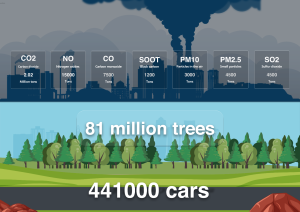
≈ 2.02 million tons of CO2 annually
-
15,000 tons of NOx
-
7,500 tons of CO
-
1,200 tons of black carbon
This dramatic reduction is environmentally comparable to:
✔ Planting 80 million trees,
each absorbing ~25 kg of CO2 per year.
✔ Removing 441,000 fuel-powered cars
from the roads of the Kurdistan Region.
These improvements address air pollution, climate change, and public health challenges while helping the Region meet international clean-air standards.
Conclusion: A New Era of Clean Energy in the Kurdistan Region
The Runaki Project aligns with global priorities: meeting rising electricity demand while combating climate change.
Its achievements include:
-
Regulating and reducing total electricity consumption
-
Ending three decades of reliance on dual power systems
-
Transitioning to cleaner fuels
-
Cutting harmful emissions
-
Lowering PM2.5 concentrations
-
Reducing noise pollution in cities and rural areas
By preventing over 2 million tons of annual CO2 emissions, Runaki demonstrates how smart energy policy can support environmental sustainability and economic modernization simultaneously.
The project ultimately strengthens the Kurdistan Region’s resilience while contributing to global climate goals—showing that cleaner electricity is not only possible, but already underway.