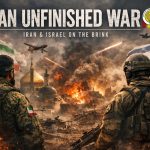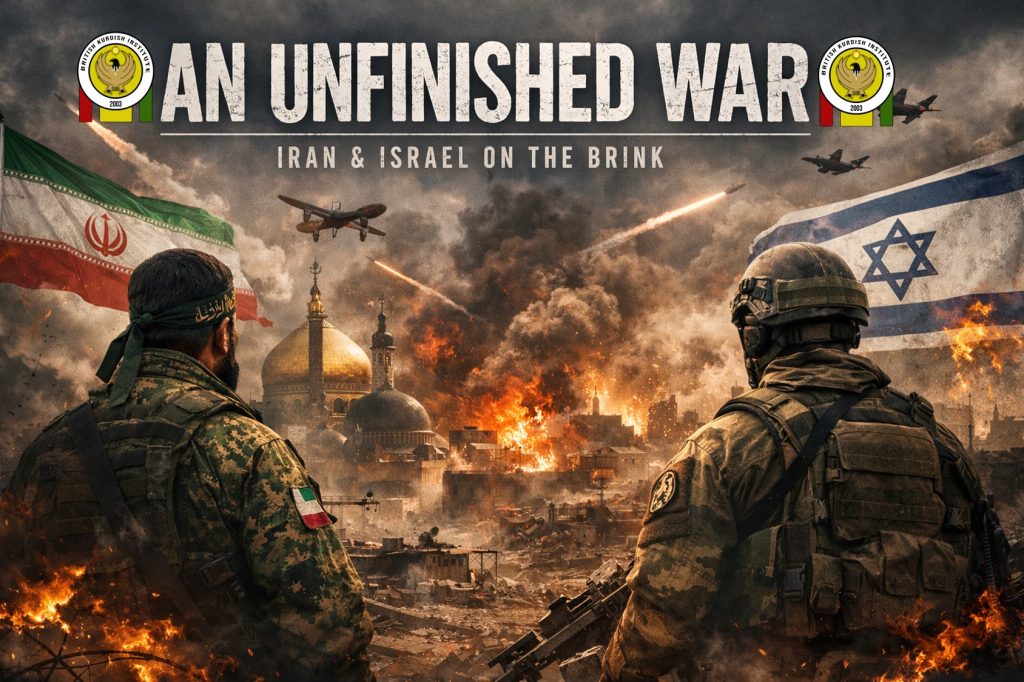

No war erupts in a vacuum—especially not between powerful states. Armed conflict is always the result of unresolved disputes, strategic ambitions, and objectives that diplomacy has failed to achieve. When dialogue collapses, war becomes the chosen instrument.
Since the fall of Iran’s Shah and the rise of the Islamic Republic, Iran and Israel have existed in a state of persistent hostility. Over four decades, their relationship has oscillated between indirect cooperation, covert coordination, and deep geopolitical rivalry. Yet despite repeated threats and escalating tensions, a full-scale war between the two never materialized.
Why War Didn’t Happen—Until Now
Although both Tehran and Tel Aviv have long sought regional dominance, this ambition alone was not enough to trigger a direct confrontation. The conditions for war existed, but a catalytic event was missing—until October 7.
The “Al-Aqsa Flood” operation carried out by Hamas against Israel served as that spark. In the immediate aftermath, many expected Israel to retaliate directly against Iran, believing Tehran to be the ultimate architect behind the attack. Surprisingly, Israel refrained.
The reason was strategic patience. Tel Aviv chose first to weaken Iran’s regional influence before confronting Tehran itself.
Breaking Iran’s Regional Network
From Israel’s perspective, Iran functions as a central hand controlling several regional pawns: Hezbollah in Lebanon, Hamas in Gaza, Syrian territory, the Houthis in Yemen, and political influence in Iraq.
In the year following the Al-Aqsa Flood, Israel systematically targeted this network. Syria was neutralized as an effective Iranian corridor, Hamas and Hezbollah were severely weakened, and the Houthis were pushed to the brink. Iraq remained—symbolically important, yet militarily ineffective against Israel.
Only after breaking these extensions did Israel turn its attention toward Iran directly.
The 12-Day War and a Strategic Shock
Israel believed Iran would not withstand sustained military pressure. However, the brief twelve-day war revealed an uncomfortable truth for both Israel and the United States: Iran’s missile and air defense capabilities were far more advanced than anticipated.
This confrontation shattered the assumption that drawing Iran into direct conflict would swiftly neutralize its regional threat. The war ended abruptly—without victory, agreement, or resolution—leaving behind what can only be described as an unfinished war.
A War Paused, Not Ended
The cessation of missile attacks did not signify peace. The Iran–Israel conflict remains a geopolitical inevitability, postponed rather than resolved.
In the months since, both sides have been reassessing their strengths and vulnerabilities. Israel has accelerated its acquisition of advanced weapons from the United States, while Iran has expanded military cooperation with China. Preparations for a decisive confrontation are clearly underway.
The Trump Factor and the October Deadline
One unusual variable has delayed escalation: the possibility of Donald Trump being nominated for the Nobel Peace Prize. This political consideration may have temporarily restrained Israel. However, this window is closing fast.
By early October, the situation will become clearer. Whether or not Trump is nominated, the restraints on war may disappear. Even if the United States initially avoids direct involvement, a prolonged conflict would inevitably pull Washington in.
Given Prime Minister Netanyahu’s symbolic focus on the anniversary of the Al-Aqsa Flood, the likelihood of escalation before October remains high.
Iraq and the Kurdistan Region: The Next Front?
The most vulnerable actors in a future war are Iraq and the Kurdistan Region. Both risk being drawn into the conflict from different angles. Israel is unlikely to tolerate Iraq as a remaining Iranian pillar before attempting to decisively confront Tehran.
During the previous confrontation, diplomatic efforts—led by Kurdistan Region President Nechirvan Barzani—helped reassure Iran and keep Kurdistan out of the conflict. This time, such guarantees may not exist.
Why Kurdistan Faces Greater Risk This Time
Several factors increase the likelihood of Kurdistan’s involvement:
-
Accusations from Tehran
Iranian power centers claim Israeli drones and weapons were transferred through the Kurdistan Region. Pro-Iranian media and figures inside Kurdistan are amplifying these allegations. -
Internal Political Fragmentation
Kurdish political forces are divided along regional and international fault lines, weakening collective decision-making. -
A Decisive War Scenario
Unlike previous clashes, the next war may aim for total threat elimination. Without a strong central authority, even neutral institutions may fail to prevent internal actors from dragging Kurdistan into the conflict.
A Call for Kurdish Political Responsibility
To minimize damage, Kurdish leaders must act proactively. This responsibility lies primarily with the PUK and the KDP. Their rivalry, interference in each other’s territories, and alignment with opposing regional powers have created fertile ground for external exploitation.
If they fail to unite around a shared strategy, they will not be the first victims—but they will certainly not be spared from the consequences.