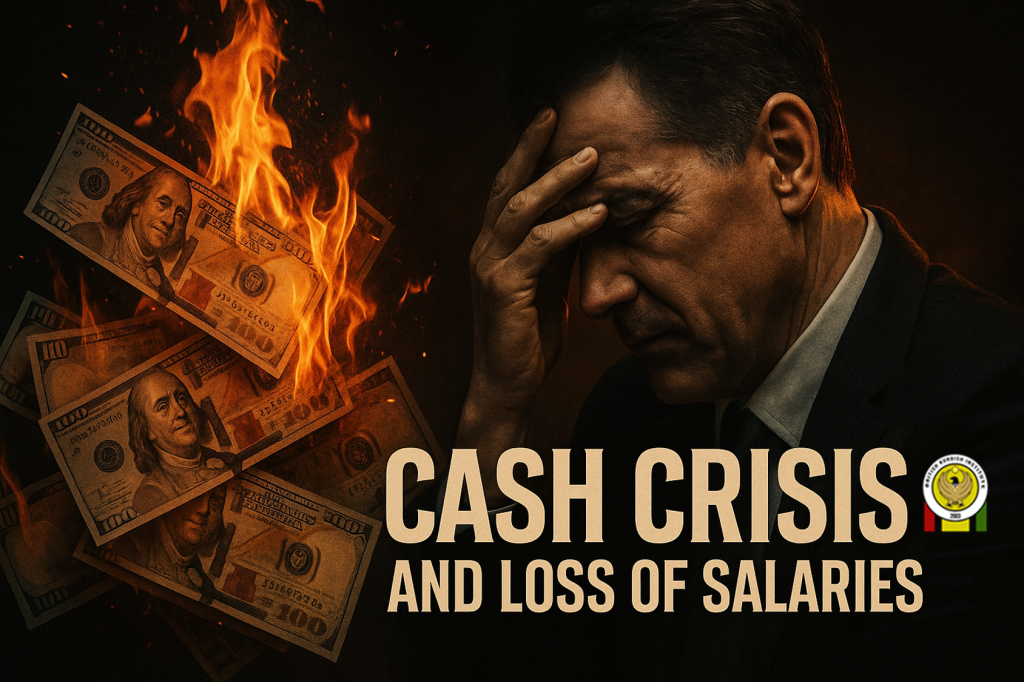

Every year, as Iraq approaches the end of its fiscal cycle, the federal government delays sending the Kurdistan Region’s salaries. Officials often blame these delays on a so-called “cash shortage.” These claims, sometimes echoed by Kurdish MPs in Baghdad, eventually become the justification for withholding the final months of salary payments. But how real is this cash crisis? And is it truly the reason behind the Region’s financial suffering?
Understanding Iraq’s Liquidity Crisis Claims
Under the three-year budget law, Iraq is permitted to borrow up to 60 trillion dinars to cover its deficit. Yet the government has deliberately reduced spending to avoid borrowing extensively. This spending reduction directly harms the Kurdistan Region, whose official budget share is 12.67% of actual expenditures after excluding sovereignty and governorate expenses.
In reality, the Ministry of Finance can issue bonds at any time to address shortages. The Central Bank of Iraq—being the issuer of national currency—can always print money if needed. For this reason, the argument that Iraq “lacks cash” is economically baseless. Any liquidity shortage is therefore political, not technical.
Budget Preparation for 2026–2028
The Ministry of Planning recently began drafting the next three-year budget (2026–2028). Although the current government is responsible for the preparation process, recent years show a pattern: delayed financial reporting and inconsistent transparency. So far, the Ministry of Finance has released data only for the first eight months of 2024—revealing major gaps between planned expenditures and actual spending.
2024 Spending: What the Numbers Reveal
According to the three-year budget (2023–2025), Iraq planned to spend 210 trillion dinars in 2024 with expected revenues of 144 trillion and a deficit of 66.6 trillion. However, real spending reached only 150 trillion dinars, and revenues were 140.77 trillion. The deficit shrank dramatically to 9.75 trillion dinars—far below projections.
Shockingly, the Kurdistan Region received only 10.79 trillion dinars: just 7.2% of actual expenditures, significantly below its official 12.67% share.
2025 Expenditures: A Troubling Forecast
In just the first eight months of 2025, Iraq spent 87.48 trillion dinars and generated 82.38 trillion in revenue, producing a deficit of 5.1 trillion. If this trend continues, total spending for 2025 will reach approximately 131 trillion dinars.
Should Iraq continue spending only 70% of its planned budget—a pattern seen in both 2023 and 2024—the Kurdistan Region’s real share drops automatically to around 8.8%, even before sovereignty deductions.
The Salary Crisis: More Political Than Financial
In 2023, workers in Kurdistan lost three months of salaries. In 2024, two months were lost. Now in 2025, at least three months of salaries remain uncertain. These repeated crises indicate structural problems in Baghdad’s fiscal policy and the political handling of the Kurdistan Region’s entitlements—not a genuine shortage of cash.
Why Reform Is Essential: Expenditure & Revenue Scenarios
Even when analyzing Iraq’s reduced real spending—30% below the approved budget—structural reforms could still eliminate the deficit. Key reform opportunities include:
1. Salary System Reform
Iraq added over 1 million new employees in just two years. In the first eight months of the current year, more than 60 trillion dinars were spent on salaries, pensions, and welfare. A 10% reduction in government employees or a 10% salary adjustment could save over 6 trillion dinars, fully covering the deficit.
2. Reducing Fuel and Electricity Subsidies
The IMF has repeatedly urged Iraq to reform energy pricing. Unlike the Kurdistan Region, Iraq still heavily subsidizes fuel and electricity, costing the government more than 10 trillion dinars annually. Liberalizing these sectors could eliminate the deficit—even when oil prices drop.
The Kurdistan Region’s Shrinking Share
Instead of receiving 14% based on population, the Kurdistan Region’s share was fixed at 12.67% in the three-year budget law. But due to “actual expenditure” practices, the real share dropped to 8.8% or even lower. This amount is insufficient to cover even one month of Kurdistan’s salary obligations (about 1 trillion dinars per month).
Even though the Federal Court ruled that Baghdad must pay Kurdistan’s salaries, banking barriers and bureaucratic obstacles regularly block the process.
Conclusion: What Kurdish Negotiators Must Do
If the new three-year budget keeps the same structure, Kurdistan’s salary crisis will become even more severe. Kurdish representatives in Baghdad must push for:
-
A genuine 14% budget share
-
Restoring full salary distribution authority to the KRG
-
Real structural reforms in Iraq’s financial system
-
Eliminating political manipulation of “cash crisis” claims
Only through substantial reforms can the Kurdistan Region secure stable salaries and financial predictability.