
Kurdistan Resumes Oil Exports Amid Political Tensions
After more than two years of suspension, the Kurdistan Region of Iraq has resumed oil exports — a development that could reshape Baghdad–Erbil relations and the country’s political landscape ahead of Iraq’s 2025 elections.
The restart, achieved through a new deal between the Kurdistan Regional Government (KRG), the Iraqi federal government, and several international oil companies, represents both economic relief and a strategic power shift.
A Fragile Breakthrough Between Baghdad and Erbil
Under the agreement, the KRG will transfer at least 230,000 barrels per day (bpd) of crude to Iraq’s State Oil Marketing Organization (SOMO), while retaining 50,000 bpd for local consumption.
In return, Erbil will receive $16 per barrel to cover production and transportation costs, and Baghdad has pledged to address around $1 billion in arrears owed to oil companies operating in the region.
While the deal provides short-term financial relief, it also strengthens Baghdad’s control over the country’s oil revenues, marking a step away from the KRG’s independent oil marketing rights.
Elections, Oil, and Power Politics
The timing is no coincidence. Iraq heads to parliamentary elections on November 11, 2025, and the oil deal may soon become a political weapon among rival blocs.
Analysts at the Chatham House Iraq Initiative 2025 conference in London warned that voter turnout could be the lowest since 2003 — with only 30–35% of Shia voters and 40–45% of Sunnis expected to participate. Despite Prime Minister Mohammed Shia al-Sudani’s relatively high popularity, low turnout could benefit entrenched figures like former Prime Minister Nouri al-Maliki and hurt reform-minded leaders such as Sudani and Parliament Speaker Mohammed al-Halbousi.
For the Kurds, this political volatility raises alarms. Historically, Baghdad’s Shia-led governments have rolled back Kurdish concessions after elections. Many in Erbil fear that this October oil deal could follow the same pattern.
Baghdad–Erbil Tensions: Cooperation or Control?
Although U.S. diplomacy helped broker the deal, Baghdad’s tone remains concerning.
During his London speech, Prime Minister Sudani stated that “all revenues, not just oil, should go to Baghdad.” This remark suggested a centralization of financial authority, alarming Kurdish leaders who see such language as an erosion of regional autonomy.
Since 2003, successive Baghdad administrations have treated Erbil as a temporary partner in times of political crisis — only to marginalize it later. This deal, while symbolically positive, could easily become another test of whether Iraq’s federal structure can truly endure.
Kurdistan Voices Hope Amid Doubt
At Chatham House, Bayan Sami Abdulrahman, senior adviser to the KRG, described the oil agreement as a “win-win-win for all parties,” noting that previous disputes had cost Iraq over $25 billion in lost revenue.
However, structural obstacles persist. Kurdistan’s parliamentary representation remains capped, regardless of voter turnout, limiting the region’s national influence.
Abdulrahman argued that upcoming elections offer a “chance to reset relations,” emphasizing that Iraq’s 2005 Constitution remains the country’s glue:
“The constitution gives something to every component in Iraq. Unity doesn’t mean uniformity—it means respect for diversity.”
Iran’s Shadow and the Centralization Threat
No assessment of Iraq’s politics is complete without Iran’s influence.
Tehran wields significant leverage through Shia militias and allied political blocs, often steering Baghdad’s policies in ways that undermine Kurdistan’s autonomy.
Deputy Parliament Speaker Shakhawan Abdullah recently accused Baghdad of intentionally delaying salary transfers to the KRG, saying officials “take pleasure in their hardship.”
Sudani’s call for treating Kurdistan like “any other governorate, like Maysan” deepened those fears — reducing a constitutionally recognized federal region to the status of an ordinary province.
As of October, many Kurdistani civil servants had received only July salaries, underscoring that the oil deal has yet to deliver real economic relief.
Global Stakes: Energy Security and Regional Leverage
The resumption of Kurdish oil exports carries implications beyond Iraq.
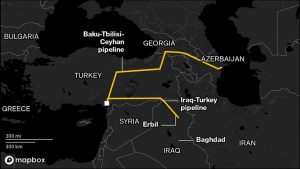
With the Ukraine war disrupting Russian energy supplies, Europe is desperate for diversified sources. Even modest flows from Kurdistan through Turkey’s Ceyhan pipeline bolster regional energy stability and reinforce Turkey’s strategic role as a transit hub.
For Washington, the deal fits its strategy of balancing Iran’s influence while maintaining stability under Sudani’s government — though it risks complicating U.S.–Baghdad relations if pressure for Kurdish autonomy intensifies.
Federalism and the Looming Deadline
The current budget agreement between Baghdad and Erbil expires in December 2025. Without a permanent constitutional settlement on oil and revenue-sharing, Iraq may again face salary crises and regional tensions.
The key question is whether Iraq’s federal system can evolve into a true partnership—or whether Baghdad will continue to centralize power under the guise of national unity.
For the Kurds, the stakes are existential: without economic independence, political autonomy will remain a fragile illusion.
A Deal or a Mirage?
The October resumption of oil exports has been hailed as a breakthrough, but it remains a fragile compromise, vulnerable to Iraq’s volatile politics.
As the country heads toward elections marked by apathy and foreign influence, the durability of this deal will test Iraq’s federal integrity and Kurdistan’s future.
For Erbil, oil is a lifeline; for Baghdad, a lever of control; and for the West, a strategic asset. Whether this triangle produces stability or merely postpones another crisis will determine the trajectory of Iraq’s democracy and the Kurdish quest for self-determination.